
Bashir Lucas Samson Lukman
Imagine watching a Facebook Reel where someone appears to speak fluent Arabic, French, Hindi, or Portuguese. Their voice sounds authentic. Their lips move naturally. Everything looks real.
Except they never recorded the video in that language.
That future is already here.
Meta has introduced AI-powered translations and optional lip synchronization for Facebook and Instagram Reels, allowing creators to reach audiences in multiple languages without recording separate videos. According to Meta, the feature preserves the creator’s speaking style while translating speech and, when enabled, adjusts lip movements to match the translated audio.
For creators, this is a powerful accessibility and growth tool.
For software developers, it represents another milestone in production-ready multimodal AI.
For journalists and fact-checkers, however, it introduces a new challenge: when a person’s face, voice, and mouth movements can all be generated convincingly, visual evidence alone becomes less reliable.
As a full-stack cross-platform developer at Sybrix, I see this feature as more than another AI update. It reflects a broader shift in how digital identity, authenticity, and trust will be managed across modern software platforms.
How Meta’s AI Translation Works
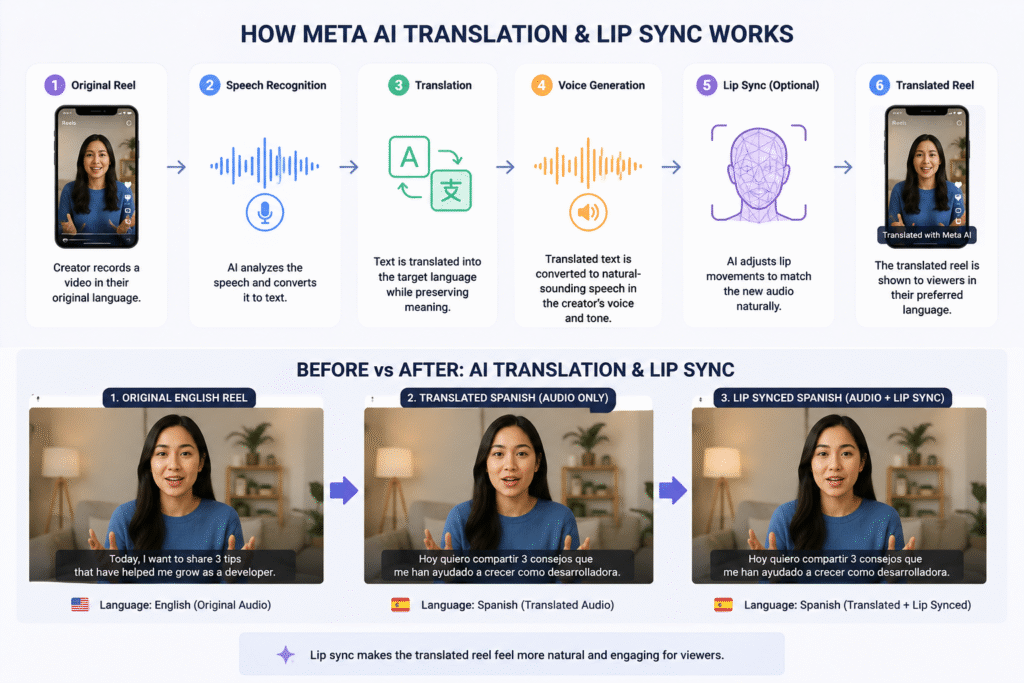
Meta’s new feature combines several AI technologies into a single publishing workflow.
Speech Translation
The spoken language in a Reel is translated into another supported language while attempting to preserve the original meaning.
Voice Preservation
Instead of using a generic synthetic voice, the translated speech is generated to resemble the creator’s tone, pacing, and vocal characteristics, making the dubbed version sound familiar.
AI Lip Synchronization
Creators can enable an optional lip-sync feature that adjusts mouth movements so they align naturally with the translated speech, creating a more convincing viewing experience.
Intelligent Distribution
Meta can automatically present translated versions of a Reel to viewers based on their preferred language, allowing a single recording to reach multiple audiences worldwide.
Transparency Measures
Translated videos are labeled as “Translated with Meta AI”, and viewers can often disable translated audio to hear the original recording.
According to Meta, creators achieve the best results when speaking clearly, facing the camera, minimizing background noise, and avoiding overlapping conversations.
Why This Matters for Software Developers
1. Multimodal AI Has Become a Product, Not a Prototype
Until recently, realistic voice synthesis and lip synchronization were largely confined to research labs or specialized AI tools.
Meta has now integrated these capabilities directly into products used by billions of people.
That changes everything.
Developers should expect multimodal AI—combining text, speech, images, and video—to become a standard capability across consumer applications rather than an experimental feature.
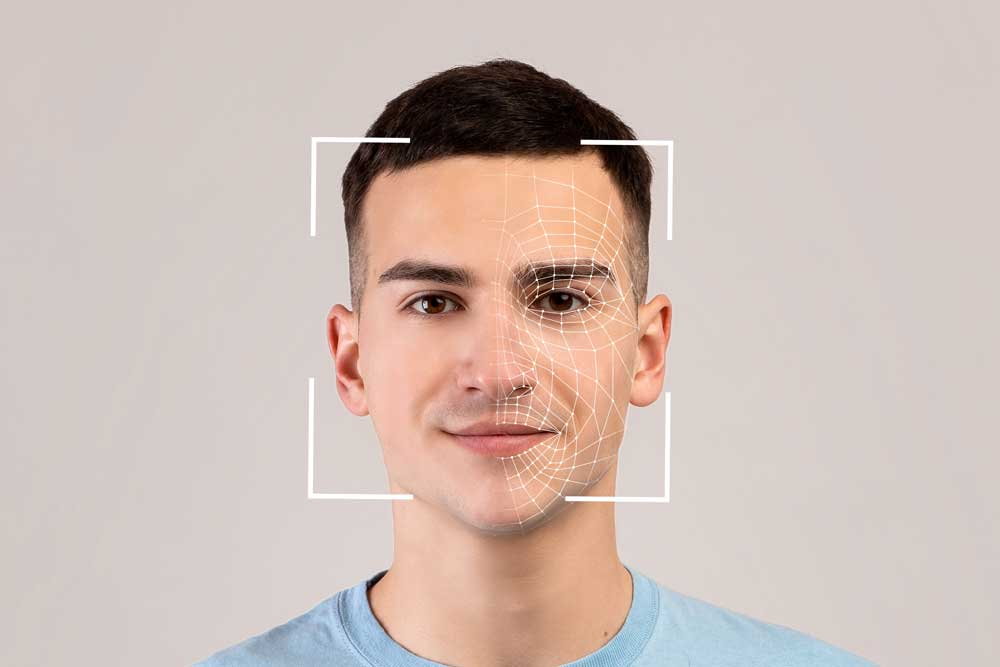
2. Voice and Facial Movements Are No Longer Reliable Identity Signals
For years, seeing and hearing someone speak has been considered strong evidence that they genuinely delivered a message.
That assumption is rapidly becoming outdated.
When AI can accurately recreate speech in languages that a person never actually spoke, facial expressions and vocal characteristics become soft identity tokens rather than definitive proof.
Authentication systems should increasingly rely on cryptographic verification, secure identities, and trusted communication channels rather than voice or appearance alone.
3. Context Can Disappear Outside the Original Platform
Meta labels translated videos to provide transparency.
However, those labels often disappear when videos are:
- screen-recorded
- downloaded
- reposted
- shared through messaging apps
- embedded on other platforms
Without that context, viewers may assume the translated version is the original recording.
Developers building media platforms should consider technologies such as Content Credentials (C2PA), persistent watermarking, and provenance metadata to preserve authenticity beyond the source platform.
4. AI Growth Features Create New Security Challenges
The same technology that enables creators to reach global audiences also introduces new risks.
Potential concerns include:
- impersonation
- misleading translations
- context manipulation
- reputation attacks
- misinformation campaigns
Every AI-powered growth feature should be evaluated alongside its security implications—not afterward.
Trust should be treated as product infrastructure, not an optional enhancement.
5. Threat Modeling Matters More Than Your Technology Stack
Whether your application is built with Flutter, React Native, Swift, Kotlin, or another framework has little impact on these challenges.
The more important question is:
How will users verify that high-stakes information genuinely came from the person it appears to represent?
Future applications should increasingly support:
- verified announcements
- signed statements
- trusted identity verification
- out-of-band confirmation for sensitive communications
Why Journalism Should Pay Attention

Journalism has always relied on primary sources.
AI-powered translation complicates what qualifies as a primary source.
When realistic lip synchronization is combined with natural-sounding translated speech, viewers may unconsciously assume that every translated word was originally spoken exactly as they hear it.
Translation itself is an interpretive process.
Subtle differences involving sarcasm, legal terminology, cultural references, or negation can significantly alter meaning.
When those translated words appear perfectly synchronized with the speaker’s lips, they may feel more authoritative than they actually are.
This places additional pressure on journalists working under tight deadlines, particularly during elections, international conflicts, or public emergencies.
Verification practices should evolve accordingly.
Recommended practices include:
- Watch the original-language recording whenever possible.
- Check whether Meta identifies the content as AI translated.
- Compare important quotations against official transcripts.
- Treat synchronized lip movements as presentation—not proof.
The Future of Misinformation
Most creators will likely use Meta’s translation tools responsibly.
They will reach wider audiences without needing to record multiple versions of every video.
However, misinformation rarely depends on perfect deception.
It often depends on creating just enough credibility to encourage people to share content before verifying it.
A realistic translated clip can become persuasive within seconds, particularly when shared outside its original platform and stripped of contextual labels.
As AI-generated media becomes easier to create and distribute, verification will become increasingly important.
What Responsible Software Builders Should Be Designing Today

Developers building modern digital products should assume that media is now fundamentally editable.
That means designing systems that prioritize authenticity alongside usability.
Practical considerations include:
- Preserve provenance whenever media is rehosted.
- Support open standards such as Content Credentials where appropriate.
- Build verification workflows into high-risk user actions.
- Educate users about AI-generated media.
- Monitor evolving regulations surrounding AI disclosure and transparency.
Trust should be designed—not assumed.
Final Thoughts
Meta’s AI translation and lip-sync technology demonstrates how quickly multimodal AI is moving from research into everyday consumer products.
For creators, it removes language barriers and expands global reach.
For developers, it changes long-standing assumptions about digital identity and media authenticity.
For journalists, it raises the standard for verifying visual evidence in an era where convincing synthetic media is becoming increasingly commonplace.
The question is no longer whether AI can generate realistic multilingual video.
It can.
The real challenge is ensuring that people can still distinguish authentic communication from convincingly altered media when trust matters most.
Sources
- Meta Newsroom — AI Translation for Reels
- TechCrunch — Meta expands AI-powered translation for Reels
- The Verge — Meta adds AI dubbing and lip-sync for creators
About the Author
Bashir Lucas Samson Lukman is a Full-Stack Cross-Platform Developer and the founder of Sybrix, where he builds scalable web and mobile applications while researching artificial intelligence, software architecture, cybersecurity, and emerging technologies. His writing focuses on the intersection of AI, software engineering, and digital trust.